Why the political ambition gap between men and women persists even at the local level
Published in Political News

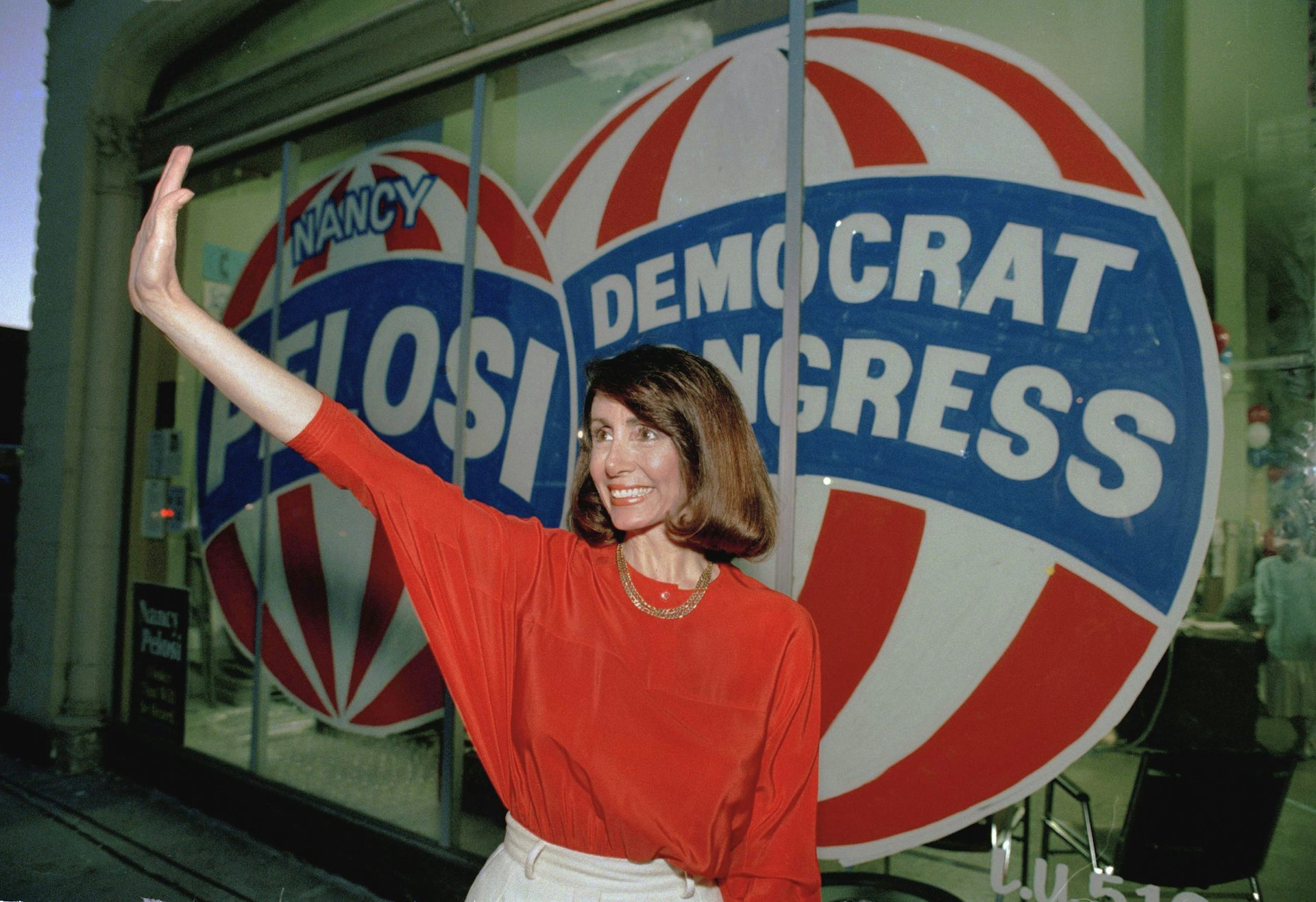


An appointment to a local library commission, reluctantly accepted, may not sound like an auspicious event. For Nancy Pelosi, however, that 1973 appointment launched what would become one of the most influential careers in modern American politics.
Pelosi’s work on the commission led to opportunities for higher office until she eventually reached her position as the first woman to serve as speaker of the House in 2007, shaping politics and policy in the United States for a generation.
Leading up to the 2026 U.S. midterm elections, the public’s attention is on national races. But like Pelosi, many of the women who have been elected to Congress launched their careers at the local level: Ayanna Pressley, Tammy Baldwin, Sarah Palin and Mia Love, to name a few.
For these women, local office served as an entry point to higher office. Yet their experiences raise an important question: How likely are women to be ambitious for local office in the first place?
Political scientists define political ambition as an individual’s interest in or intention to run for elected office.
Scholars know that women are less likely than men to be interested in pursuing state and national political office. In our recently conducted analysis, Gender and Local Political Ambition, published in the Elements in Gender and Politics series from Cambridge University Press, we investigate whether the gap in ambition for office persists locally. Along with co-authors Christina Wolbrecht, Mirya Holman and Lakshmi Iyer, we surveyed 2,000 civically and politically engaged Americans to understand how women view local offices, their motivations for seeking them and whether they are just as ambitious for them as men.
We found that the gender gap endures and women remain less ambitious for local office compared to men. However, the women who do express ambition tend to be ambitious for local office only.
For women, local politics may present a best-case scenario for those interested in seeking office.
The positions are closer to home, making it easier for officeholders to balance the demands of public service and their personal lives. Running for local offices also requires less time and money to mount successful campaigns. For women, who often find campaigning more challenging, this is especially attractive.
Though harassment, threats and violence toward women still occur in local contexts, the lower visibility of being a local government official rather than holding a state or federal office means this violence may occur less frequently.
Local government may also provide a setting uniquely suited for women to engage in problem solving, as the opportunity to work toward resolving problems in their own communities may be more attractive to them.
While local office might be more attractive to women, the ambition gender gap persists.
We found that women’s lesser ambition can be attributed to lower confidence in their ability to serve. They view themselves as underqualified, though on paper they are often overqualified. Women also receive less encouragement to pursue local office from their family and community networks.
The women we surveyed were especially concerned about harassment and violence, with good reason. Women holding local office across the country report increasing levels of harassment and threats, such as Emma Mulvaney-Stanak, the mayor of Burlington, Vermont, who was subjected to stalking this year.
Given our sample of highly engaged Americans, these are the women we might expect to be most interested in attaining local office. Yet they are still less ambitious than men.
Even women who are politically ambitious are more likely to seek only local-level office rather than state or federal office.
Women in our surveys expressed a strong desire to seek local office to make a difference and solve problems within their community.
One respondent wanted to improve the “quality of life and access to services for (her) community.” Another noted that she wanted to use her education and experience to “add to the conversation and be part of the solution rather than the bitchfest.”
For the women in our sample, the needs of their immediate community were a source of motivation. Specifically, women cited as motivators “affordable housing,” “crime” and “poverty,” and in some cases “corruption.” One respondent put it bluntly, saying, “Our city leaders are rather useless. They make poor decisions and don’t strive to represent their constituents.”
Women were also less likely to aspire to higher office, perhaps because local office provides the ideal venue to solve the problems they care about most. By contrast, men tended to view local office primarily as a pathway to higher office.
Differences also emerged across identity groups. Black women were especially likely to concentrate their ambitions at the local level, while Hispanic women were more likely to look beyond local office.
We found that LGB-identifying respondents were not particularly ambitious for local, state or federal office, whereas trans and nonbinary people were more ambitious for local compared to higher office.
There is no shortage of skilled and qualified women to run for local office. Ambition is partially to blame for their underrepresentation in those offices.
Our research offers insight on closing this gap, such as encouraging women to run for local office and encouraging local organizations to recruit women for candidate training programs.
The next generation of women politicians could just be waiting for one person to encourage them to seek local office. As more women serve in local offices, they may inspire other women to follow in their paths, helping develop the next generation of political leaders.
This article is republished from The Conversation, a nonprofit, independent news organization bringing you facts and trustworthy analysis to help you make sense of our complex world. It was written by:
Read more:
Women are still underrepresented in local government, despite a woman running for president
Girls learn early that they don’t have much of a place in politics
Seeing women govern encourages support for women in politics – with no apparent backlash among men
The authors do not work for, consult, own shares in or receive funding from any company or organization that would benefit from this article, and have disclosed no relevant affiliations beyond their academic appointment.








































Comments