Britt bill would launch national office to combat financial fraud
Published in News & Features
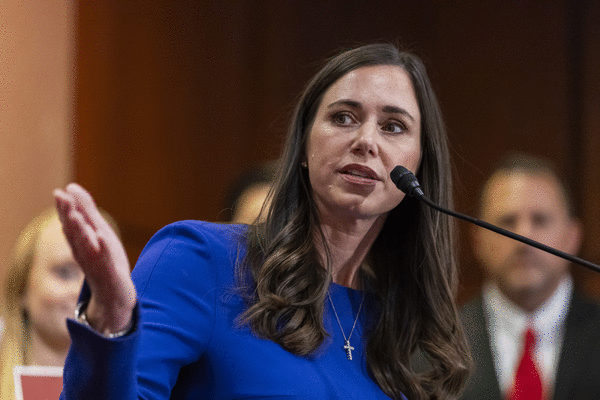
WASHINGTON — A bill introduced by Sen. Katie Britt on Wednesday aims to combat a rising diversity of financial fraud by unifying the U.S. effort to fight it.
The draft bill would establish a National Office for Scam and Fraud Prevention in the White House that would coordinate federal, state and private sector efforts. It is aimed at ensuring that federal agencies, law enforcement, financial institutions, telecommunications and technology companies and other groups work together, according to an overview from Britt.
The new office would promote intelligence sharing across the public and private sectors, coordinate consumer education efforts and improve assistance for victims.
Britt, R-Ala., said the effort is needed because fraudsters operate nimbly utilizing social media while taking advantage of fragmented or disorganized responses from individual companies and government agencies.
“This effort is about bringing everyone to the table and making sure our response keeps pace with the criminals who are exploiting new technologies and gaps between sectors,” she said in a statement. “When we work together to identify threats earlier and share information more effectively, we can better protect American families and businesses.”
The office would develop a “lexicon of fraud” so that terms for different kinds of scams are standardized between various federal law enforcement agencies to promote a “whole-of-government response,” a Britt aide said.
The office also would work to broaden the approach to combating fraud beyond just having financial institutions reimburse victims. It would tap telecommunications and technology companies to address fraud at its source, such as rip-offs that start as text messages, social media posts or online advertisements.
Britt has made fighting elder financial abuse a priority. She is the sponsor of a bill that would allow state, local and tribal law enforcement agencies to use federal grant funding to investigate financial fraud, particularly scams targeted at the elderly.
The measure highlights the prevalence of "pig butchering," a common technique where a predator cultivates a personal relationship with a victim over many months to extract the most cash.
The House passed its version of the bill in September with overwhelming bipartisan support. The House sponsor is Rep. Zach Nunn, R-Iowa.
Senior financial abuse also was the focus of a bill the House passed in an overwhelming 414-2 vote in June. The legislation, sponsored by Rep. Ann Wagner, R-Mo., would codify Securities and Exchange Commission guidance that permits mutual funds and their agents to postpone the sale of securities if there is a reasonable belief that financial exploitation of someone who is elderly or disabled is occurring
It's not clear whether the Senate will take action on these bills or Britt's by the end of the year.
“If it doesn’t get through in the lame duck, it will continue to be a priority in the 120th [Congress],” the Britt aide said.
_____
©2026 CQ-Roll Call, Inc. Visit at rollcall.com. Distributed by Tribune Content Agency, LLC.






Comments