As Americans gather for Thanksgiving, a centuries-old Sikh tradition offers an expansive vision of hospitality
Published in News & Features
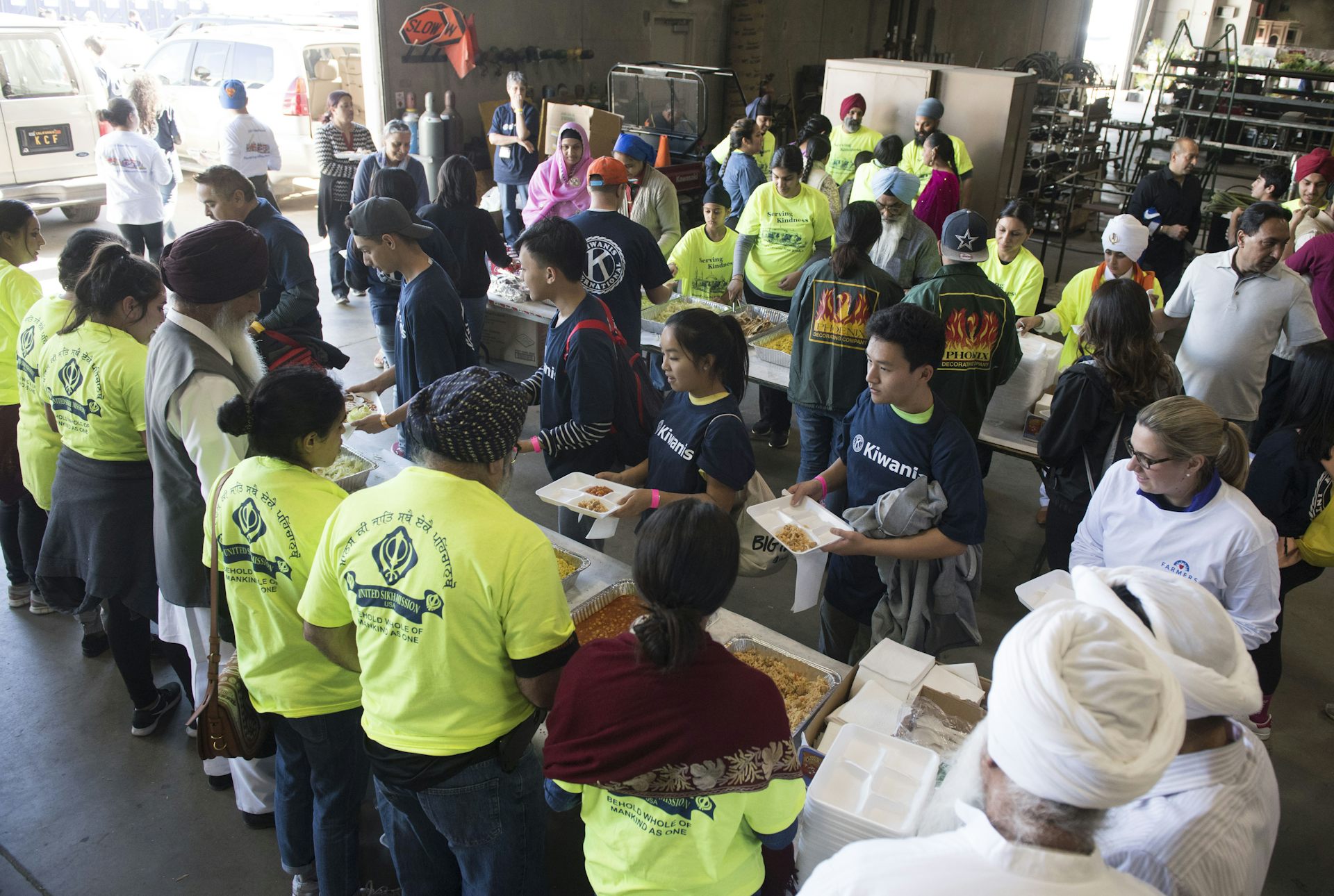
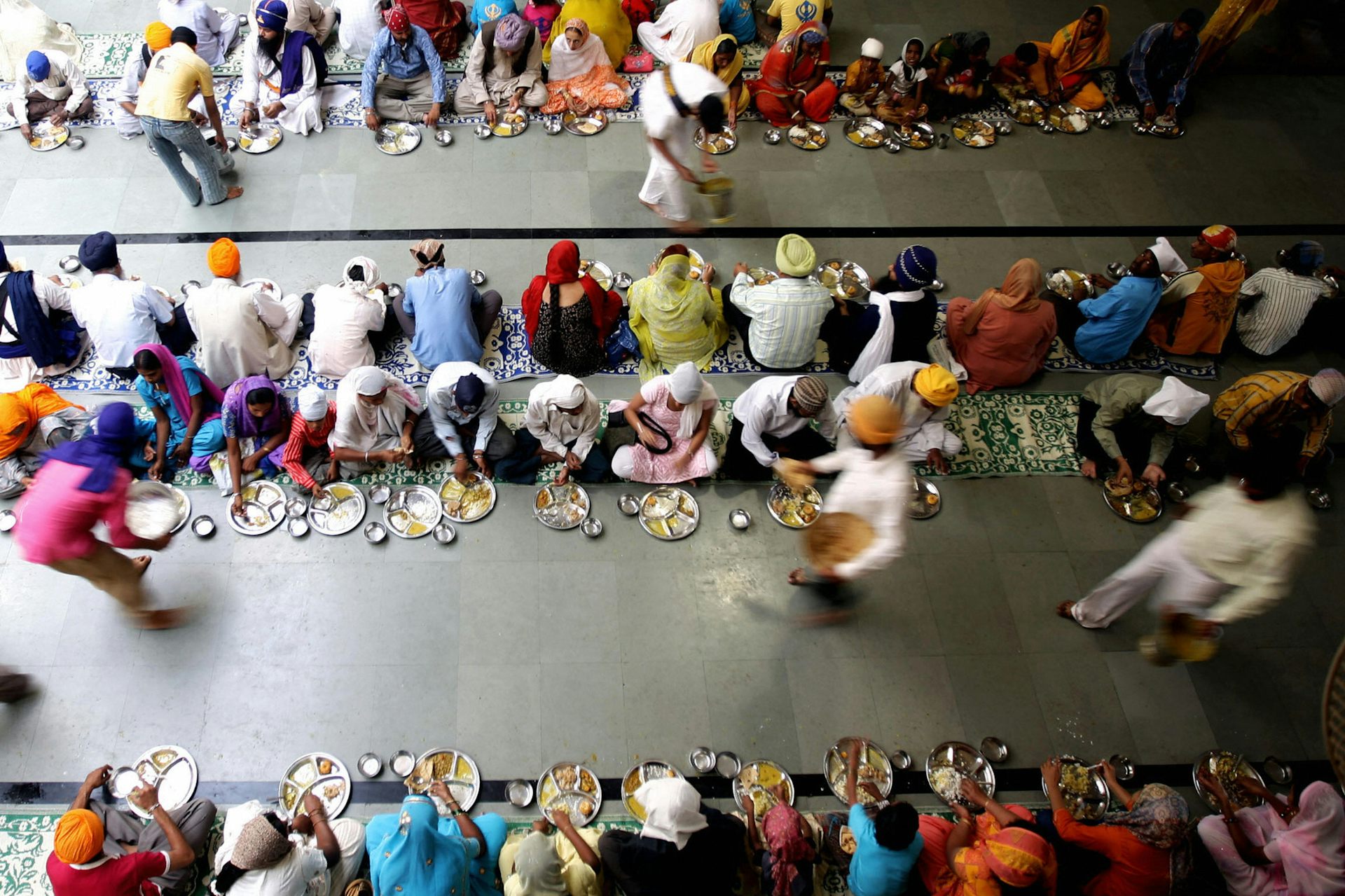
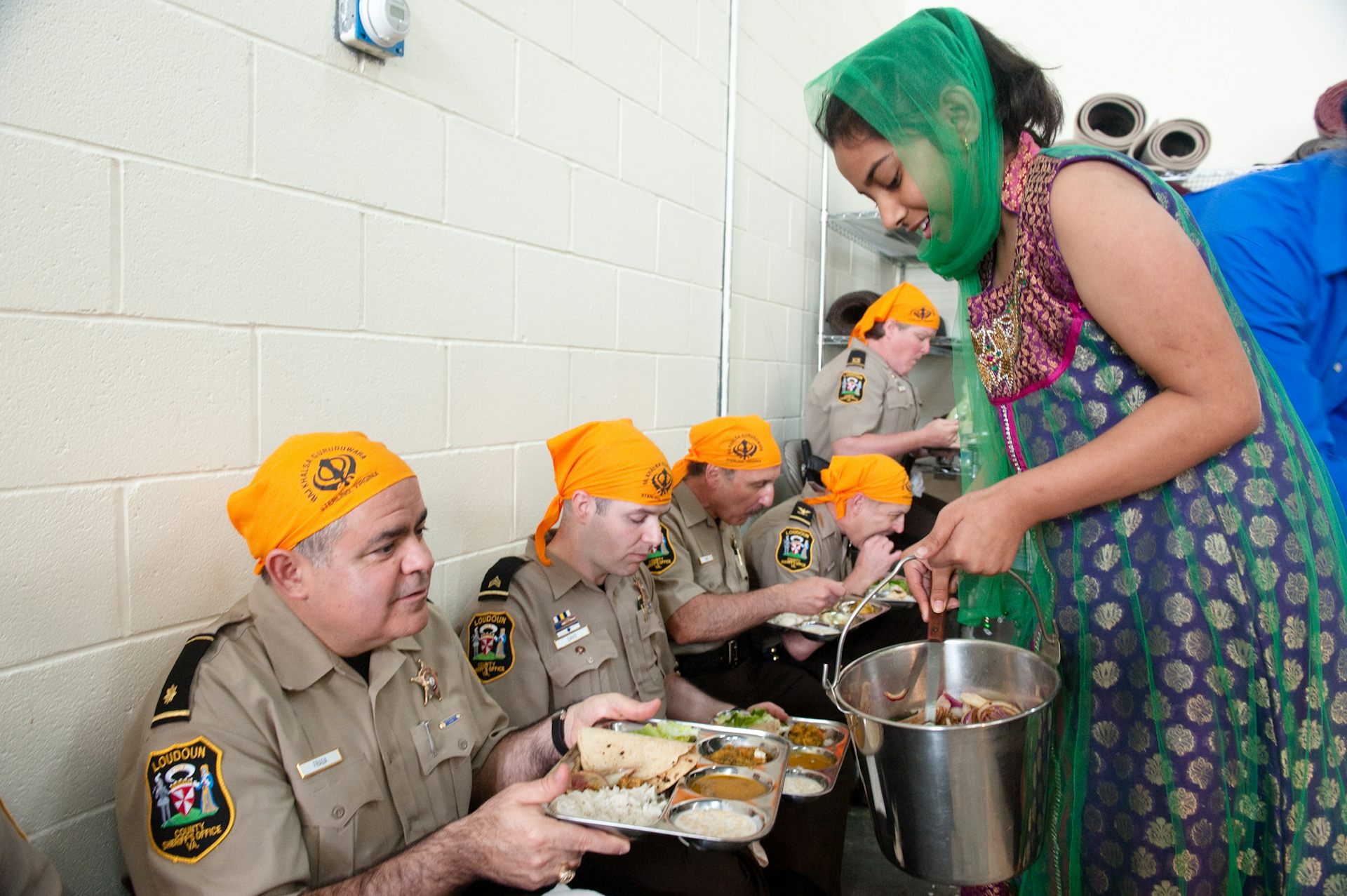



On Sundays at Gurdwara Guru Nanaksar in Chapin, South Carolina, diners sit in rows on the floor while volunteers walk along each row carrying pots and trays of food. They pause to offer each person a spoonful of dal, a dish made with lentils, or a serving of vegetables. When the roti – a kind of flatbread – comes around, diners hold out both hands, palms up. A volunteer places the bread directly into their hands. This is “langar,” the free communal meal served at Sikh houses of worship around the world.
Sikh houses of worship are known as “gurdwaras,” from Punjabi for “doorway to the Guru.” Sharing langar inside the gurdwara requires no profession of faith.
In the United States, many people spend the weeks before Thanksgiving deciding whom to invite and how much food to make. This year on Nov. 24, two days before Thanksgiving, many Sikhs will celebrate Guru Nanak Gurpurab, which marks the birth of Guru Nanak, the founder of the Sikh faith. One way Sikh communities mark the occasion is by sharing langar, which puts Sikh teachings on equality and service to others into practice.
The closeness of the two dates prompted me to think about whom we share meals with on Thanksgiving and what it means to prepare food for anyone who comes.
At Coastal Carolina University, my students and I explore how people carry their traditions into new places and sustain them in everyday life. Over the past three years, students from my classes and I have often visited the Sikh community to attend services and share meals.
What I find most compelling about langar is the way a shared meal can help people feel at home. At the gurdwara, longtime members and first-time visitors sit down together as equals, regardless of what they may believe.
Preparing and serving langar is a form of “seva,” often translated as selfless service. In his chapter on Sikh economic ethics, religious studies scholar Pashaura Singh explains that Guru Nanak taught people to earn a living through honest work and share what they earned with those in need. The free communal kitchen puts that teaching into practice.
On Sunday mornings in Chapin, volunteers preparing the meal can hear the recitation of “Sukhmani Sahib,” a hymn composed by Guru Arjan, the fifth Sikh Guru. The hymn’s title has been translated as “Pearl of Peace.” As volunteers chop onions or make tea, they hear the recitation from the prayer hall over loudspeakers in the langar hall.
In “Sikh Langar: Tasting the Transcendent,” scholar Nikky-Guninder Kaur Singh explores the spiritual significance of preparing and eating langar together. She connects the shared meal to accounts of Guru Nanak’s encounter with the divine, in which food and drink are part of the experience.
At the Golden Temple, also known as Sri Harmandir Sahib, in Amritsar, in the northern state of Punjab in India, the invitation is open around the clock. The Guru Ram Das Langar at the Golden Temple, often described as the world’s largest free community kitchen, serves free vegetarian meals to about 100,000 people a day. The kitchen carries on a tradition that dates back about 500 years, to Guru Nanak’s community at Kartarpur in Punjab.
In her article on equality and selfless service in Sikhism, Vesna Ratković, then a doctoral student on the University of Zagreb’s faculty of philosophy and religious studies, explains how “langar” puts equality into practice by welcoming people to eat together regardless of religion or caste.
A newcomer can see how people relate to one another simply by taking a seat. Sitting down to eat together as equals gives everyday expression to a Sikh understanding of oneness in which all beings are part of a universal whole. A volunteer can practice the same principle by serving whoever happens to be in front of them.
At the Chapin gurdwara, families take turns sponsoring, preparing and serving langar. Each week, an email goes out to everyone who has signed up for the mailing list, inviting them to help. When my students and I asked participants what offering a meal meant to them, they told us they simply wanted to serve others, without thinking about earning merit or receiving a reward.
Another Sikh term, “sangat,” refers to the community that gathers. A meal can be prepared in a few hours, but the relationships that make a community a source of support develop over time. Returning to the same place gives people repeated chances to get to know one another and find ways to help.
One man I spoke with in Chapin told me how stressful it had been to move to South Carolina. He had moved from India for economic opportunity. His English was limited, and the family members who came with him spoke none. He had never considered himself religious.
When a friend invited him to the gurdwara, he went out of curiosity. As soon as he walked in, he recognized the smells of home, and someone greeted him in Punjabi, his first language. He told me that his stress melted away in that moment. He has been going back ever since, helping out wherever he can, becoming part of the sangat.
Gurdwaras play a similar role elsewhere around the world. In a chapter in the edited book “Glocal Punjabis,” Nidhi Singh, a researcher who writes about the Sikh diaspora, describes how gurdwaras in the United Kingdom help Sikh newcomers find community as they settle in a new country. She notes that gurdwaras are places where Sikhs gather for worship, social events and cultural activities.
One of my students described sitting with others at langar in Chapin. “It didn’t feel like visitors and hosts anymore,” the student wrote. “It felt like everybody was part of the same group.”
At Thanksgiving, many Americans set a place for family and friends. The Sikh practice of langar asks us to imagine setting a place for someone whose name we don’t yet know. Gurdwara volunteers do just that each time they prepare a meal for whoever walks through the door.
This article is republished from The Conversation, a nonprofit, independent news organization bringing you facts and trustworthy analysis to help you make sense of our complex world. It was written by: Ronald S. Green, Coastal Carolina University
Read more:
Your favorite Thanksgiving dishes won’t cost substantially more this year – here’s why
Why Sikhs celebrate the festival of Baisakhi
Who are the Sikhs and what are their beliefs?
Ronald S. Green receives support from ASIANetwork, South Carolina Humanities, and Coastal Carolina University.







Comments