Crypto's Trump-fueled Washington boom reaches its endgame
Published in News & Features
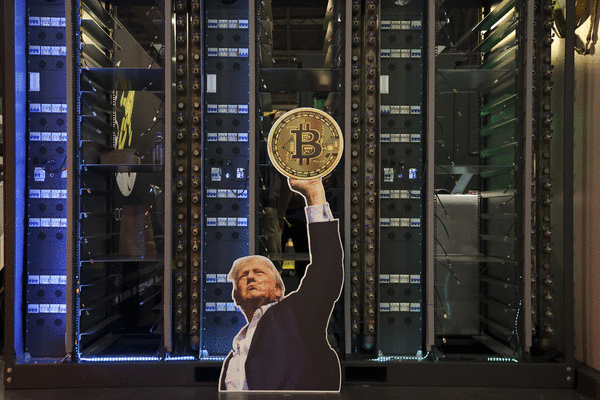
Crypto’s extraordinary run of political good fortune in Washington has come to an abrupt halt. With Democrats set to control Congress following their midterm sweep, the industry faces the prospect of tougher rules and closer scrutiny of its ties to President Donald Trump.
For two years, the industry enjoyed something few businesses ever get in the nation’s capital: a president who made digital assets a national priority while amassing his own crypto fortune, regulators clearing a path for wider adoption, and a Republican Congress sympathetic to its agenda.
Now crypto faces the harder test of becoming a lasting force in finance as its extraordinary political advantage evaporates. The Democratic sweep threatens to make comprehensive legislation harder to secure on the industry’s preferred terms and raises the prospect of congressional investigations into Trump’s crypto dealings.
“Many significant figures in crypto aligned themselves with the Trump family,” said Austin Campbell, a crypto expert and former banker who is now an adjunct professor at the NYU Stern School of Business. “Those chickens are likely to come home to roost.”
Trump famously launched his own digital assets, welcomed crypto executives to the White House and made the industry’s ambitions part of his political agenda. In turn, crypto’s biggest victories became closely associated with his presidency, even as his personal financial interests complicated the industry’s efforts to secure broader political support.
All that came to a head in September, when the Senate failed to advance the Clarity Act, which would have established clearer rules for exchanges and other digital-asset businesses. Trump’s crypto dealings became a flash point, though disagreements over stablecoin rewards, investor protections and banking competition also contributed to the impasse.
The election is now set to change the terms of that debate. Democrats have signaled plans to demand tougher ethics restrictions, stronger consumer protections and a greater role for the Securities and Exchange Commission in overseeing digital assets. Those changes would depart from the framework many crypto companies sought under Republican control, but could also create a new path to legislation if the industry can build support across party lines.
“There’s going to be a defensive posture as the industry readjusts to new leadership, at least initially,” said Adam Minehardt, chief policy officer at Hyperliquid Policy Center.
The industry’s big political bets could also have consequences. Sherrod Brown, defeated in 2024 as crypto lobby groups poured millions of dollars into the campaign against him, unseated Ohio’s Republican senator, Jon Husted. Brown could take a top position on the Senate Agriculture Committee, which oversees the Commodity Futures Trading Commission, a key crypto regulator, according to researcher Capstone.
Democratic control of Congress also brings greater power to investigate Trump’s business interests. Lawmakers have already sought information about ventures involving the president and his family. Trump has consistently denied that his business interests conflict with his presidential duties.
California Rep. Maxine Waters, a staunch critic of Trump’s crypto ties, is positioned to wield greater influence on the House Financial Services Committee, while Massachusetts Democrat Elizabeth Warren is expected to lead the Senate Banking Committee.
“You’re going to have a real oversight agenda with empowered chairs,” said Minehardt. “We’re already seeing signals of it from different members’ offices. They’re going to pull all kinds of strings and see where they lead.”
Still, many of crypto’s gains will be difficult to unwind. The federal stablecoin law would require new legislation to repeal, while the Securities and Exchange Commission and CFTC continue developing rules that could bring digital assets further into established financial markets. That work can proceed under Trump regardless of the election result, although future administrations could revisit agency decisions.
Congress does have tools to influence regulators, such as the power of the purse, said Tyler Gellasch, chief executive of the Healthy Markets Association. It can seek to prevent agencies from spending resources on policy issues it disagrees with, a tool he said Republicans used for years to block the SEC from adopting political-spending disclosure rules. Congress can also investigate agency decisions and relationships with politically favored firms, he said.
The market presents a different challenge. Bitcoin’s history of sharp boom-and-bust cycles under administrations of both parties complicates any attempt to attribute its price prospects to Washington. Bitcoin remains well below its previous highs, despite the Trump-era regulatory relief and political support that fueled expectations of a golden age for digital assets.
The recent Binance hack underscored another challenge: security. The exchange suffered $6.3 billion in losses, but has since effectively replenished the stolen cryptocurrency, using a combination of money from its corporate treasury as well as two insurance funds.
“The crypto industry needs to get these hacks out of the headlines,” said Peter Atwater, an adjunct economics professor at William & Mary. “Repetition matters. It will be interesting to see whether this propels Democrats to shift the regulatory pendulum back, with a greater emphasis on safety and soundness.”
All told, crypto’s prospects extend well beyond its alliance with Trump. Digital assets now encompass investment funds, stablecoin payments and financial infrastructure involving institutions whose interests outlast any presidency. For an industry seeking customers across the political spectrum, a less partisan identity could ultimately prove an advantage rather than a setback.
Industry advocates are already stressing their bipartisan ambitions.
“Digital assets have always been bipartisan, and we stand ready to work with both new and returning members on both sides of the aisle,” said Ji Kim, chief executive of the Crypto Council for Innovation.
©2026 Bloomberg L.P. Visit bloomberg.com. Distributed by Tribune Content Agency, LLC.






Comments