Transmission overhaul threads careful needle in permitting bill
Published in News & Features
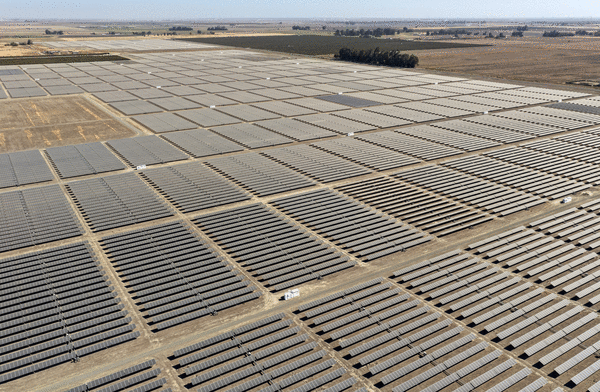
WASHINGTON — Electricity prices have gained political salience as U.S. households feel the financial strain ahead of next month’s midterms. Senate authors of the landmark permitting overhaul bill argue it would lower costs through quicker approvals for new transmission lines to get more clean power flowing to homes and businesses more efficiently.
Set for a key procedural vote on the legislative vehicle when senators return on Nov. 9, the measure would make several politically dicey changes to bedrock environmental laws intended to make it easier to get more infrastructure projects built faster — from electric grid upgrades to oil drilling rigs.
That’s created a powerful alliance of clean energy and fossil fuel industry backers, a rarity in Washington that’s put some major lobbying muscle behind the yearslong effort culminating in last month’s deal between ordinarily strange political bedfellows.
The vast majority of power-generating facilities waiting years to be connected to the grid are wind and solar farms and battery storage systems, about 8,200 projects capable of over 2,000 gigawatts worth of generation and storage, according to the Energy Department’s Lawrence Berkeley National Laboratory.
Senate Energy and Natural Resources ranking member Martin Heinrich, D-N.M., one of the key negotiators, often cites the SunZia Wind and Transmission Project in his home state as motivation for the bill. The project, with 916 wind turbines and 550 miles of transmission lines, took 17 years to complete.
Such facilities are typically built in remote areas away from population centers, requiring more land and a need to navigate a substantial state-federal permitting bureaucracy. By contrast, traditional coal- and natural gas-fired power plants were mainly built in the 20th century with decades of transmission infrastructure in place around them.
Even some environmental critics of the broader bill support the measure’s transmission title. One is the Natural Resources Defense Council, which said that part of the bill would “produce substantial and durable benefits, updating an aging power grid by allowing new investments.”
Large electric utilities, however, aren’t so sure about upending a regulatory process for new transmission lines that’s mostly been handled at the state and local level where they’ve enjoyed more sway. But the industry appears divided ahead of next month’s vote, which gives the bill’s supporters an opening.
Swing-state pressure
Pressure to act is also coming from the midterm campaign trail. A Hart Research survey of battleground House districts in early October, commissioned by environmental groups, found that heating and electric bills were the third-most important issue for voters after food costs and gas prices.
The political impetus is evident from Energy Information Administration forecasts that wholesale electricity prices will average $52 per megawatt hour this year, up 11 percent from 2025.
In territory governed by PJM Interconnection, the regional transmission organization responsible for 13 states — including those with key congressional seats in play, like Michigan, Ohio and Pennsylvania — prices are up 41 percent on average.
Reasons include utilities passing through the costs of upgrades to aging grid infrastructure; surging demand from data centers powering artificial intelligence; increased electric vehicle usage; extreme weather events and hotter temperatures driving consumers to turn up the air conditioning.
Whatever the causes, supplies aren’t coming online fast enough to meet demand for some 166 additional gigawatts of power needed by 2030, according to estimates by Grid Strategies, a consulting firm.
That’s mostly going to come from solar, wind and battery storage, with some natural gas as well — provided there’s enough power lines for delivery, said Ray Long, president of the American Council on Renewable Energy.
‘Win-win’
In the past, a sticking point for GOP lawmakers on permitting overhaul efforts has been trying to ensure their constituents don’t get saddled with higher bills to cover costs associated with transmission buildout if those communities aren’t benefiting from new renewable power sources.
The Senate bill tries to fix that problem by requiring the added costs to be shouldered only by those consumers getting their electricity from renewables, with payments “roughly” proportionate to the benefits received.
The bill “is a win-win for the issues that both Republicans and Democrats are trying to address in our power and electricity needs,” Long said.
But some utility industry players remain skeptical of shifting authority over the approval process from states to the Federal Energy Regulatory Commission, where they typically have less direct influence.
A leaked document from Oklahoma Gas and Electric Co., obtained by the nonprofit environmental group Energy and Policy Institute, lays out “significant concerns” with the bill as currently drafted.
Under the bill, FERC would be required to issue permits for high-voltage interstate transmission lines of 230 kilovolts or greater when a state lacks authority or does not act on an application within a year. Developers for larger projects of 345 kilovolts or more could apply simultaneously to FERC and a state to allow reviews to run on parallel timelines.
The bill also includes provisions to address transmission planning, a practice that has not been codified and is largely based on FERC regulatory orders.
The bill would codify a FERC order that requires local planning commissions to create a regional planning process, and for neighboring regions to create an interregional planning process. Projects approved in an interregional plan could then be taken directly to FERC for permitting, effectively cutting out state and local approvals.
It would also allow states to refer local utilities’ transmission planning practices to FERC for investigation. FERC would be able to cut a utility’s allowed profit or impose fines of up to $5 million if it finds an action was unjustified. This is intended to address concerns that utilities may overbuild infrastructure through inefficient spending that increases customer costs.
There’s also a mandate to use certain advanced transmission technologies FERC identifies as more cost-effective.
Finally, the measure would codify a separate FERC order barring incumbent utilities’ “right of first refusal,” or ability to build their own transmission lines in their service territory free of competition from independent developers. States could still enact their own rights of first refusal, but codifying the federal ban is viewed as a step backward.
OG&E’s position paper takes issue with the above provisions, arguing that “permitting reform should not expand federal authority at the expense of the states, displace or weaken state authority, eliminate [right of first refusal] protections, or expand a competitive transmission process that has delayed projects and increased customers overall costs.”
OG&E spokesperson Christi Woodworth confirmed the document was authentic. “OG&E believes there is a need to build necessary transmission faster and at the lowest reasonable cost while preserving the existing roles of the states and accountability to customers who ultimately bear those costs,” Woodworth said.
Industry split
Big investor-owned utilities like Duke Energy Corp. and Southern Co. helped scotch a 2024 permitting package negotiated by then-Senate Energy and Natural Resources Chairman Joe Manchin III, I-W.Va., and then-ranking member John Barrasso, R-Wyo.
This year’s package is considered even more aggressive when it comes to overhauling the process of greenlighting transmission lines. So far, only two major utilities — Berkshire Hathaway Energy and American Electric Power Co. — have expressed support.
“This legislation will help accelerate the process to bring critical infrastructure projects online, supporting the investments required to enhance reliability for our customers, reduce costs, and create new economic opportunities in the states we serve,” said AEP CEO Bill Fehrman, whose company serves 11 states including Ohio and Michigan.
Other big utilities have kept their powder dry so far. The same goes for the main industry trade group, the Edison Electric Institute, which hasn’t taken a position.
“We are reviewing the transmission provisions and how they may affect efforts to deliver reliable, affordable electricity for our 250 million customers and their communities,” EEI President Drew Maloney said in a statement.
House Energy and Commerce Chairman Brett Guthrie, R-Ky., has said he wants changes to the Senate bill before he’d back taking it up in his chamber. A Guthrie spokesperson didn’t elaborate further on what he’s looking for.
Guthrie is the No. 1 congressional recipient of campaign donations this cycle from the utility sector, according to an analysis of Federal Election Commission filings by the Energy and Policy Institute, which tracks the industry’s lobbying and political activities.
Speaker Mike Johnson, R-La., has endorsed the overall thrust of the Senate bill, though it could still look different if and when it reaches that chamber during the lame-duck session. Senate sponsors say they are soliciting feedback for a manager’s amendment they’ll offer if their chamber votes to get on the bill after the elections.
David Pomerantz, executive director of the Energy and Policy Institute, said it is likely that many utilities will oppose “virtually all the transmission reforms in the bill” and may characterize some of the provisions expanding FERC authority as a “federal power grab.”
“It’s very easy for me to imagine utility lobbying against the transmission reforms, either sinking the bill or, in a scenario where the bill passes, just severely weakening the parts of it that have the most buy-in,” said Pomerantz. “I think that’s a real threat to the bill’s efficacy, at least for the things that a lot of people seem to value in it.”
_____
©2026 CQ-Roll Call, Inc., All Rights Reserved. Visit cqrollcall.com. Distributed by Tribune Content Agency, LLC.





Comments