No electric shock gloves, face coverings: Newsom pushes back on Trump's 'Orwellian' immigration agenda
Published in News & Features
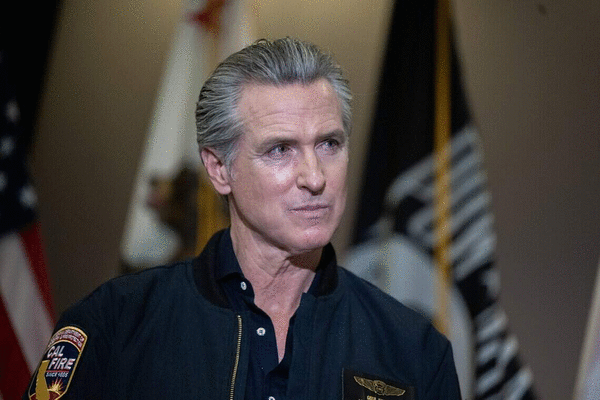
SACRAMENTO, Calif. — Gov. Gavin Newsom signed a raft of bills designed to push back on the Trump administration's immigration enforcement in California, including bans on electric shock gloves and a revamped ban on law enforcement face coverings after a previous law was blocked by a federal judge.
The more than 20 bills approved by the governor Tuesday were crafted to thwart tactics used by Immigration and Customs Enforcement agents, including the use of facial coverings and making arrests outside courthouse immigration hearings. Other bills are meant to boost state oversight of federal detention centers.
"Trump has put his political interests above the health, safety and livelihood of American families. California is taking action to strengthen transparency, accountability, and oversight around immigration enforcement in our state," Newsom said in a statement. "This is about stepping up where the federal government has failed our communities. We will continue protecting our people, upholding the rule of law, and making clear that if the federal government operates in California, we will hold them accountable."
The governor signed legislation to ban the use of electric shock gloves by any law enforcement in the state, which was hastily written and passed after reports that the Department of Homeland Security planned to spend $20 million to outfit agents with the gloves. Newsom described the emerging technology as "Orwellian" in a video posted to social media Tuesday morning.
Republican lawmakers opposed the ban, arguing that it would take away a less-lethal option from law enforcement.
Assembly member LaShae Sharp-Collins (D-San Diego), who authored the bill, said new public safety technology "must be proven safe and accountable before it is used not after someone is seriously injured or killed" and applauded Newsom's signature.
One bill, dubbed the "No Kings Act," makes it easier for residents to sue federal agents for alleged civil rights violations, such as racial profiling, unlawful searches or interfering with the right to free speech.
Its author, Sen. Scott Wiener (D-San Francisco), said the law already applies to state and local officials and that his bill, SB 747, closes a loophole that exempts federal officials. Citing the shooting deaths of four people this year at the hands of immigration agents, Wiener said the law "provides long overdue accountability to end the impunity powering ICE and Border Patrol's terror campaign."
Newsom signed another bill by Wiener that bans ICE agents and other law enforcement from wearing face coverings or masks while on duty. After a federal judge blocked his prior bill, which applied to federal agents but not state police, Wiener put together legislation that applies to both.
Many of the bills Newsom signed Tuesday aim to improve state oversight at immigration detention centers within the state and slow the development of new facilities.
Among them is AB 1801, which requires municipalities to wait at least 180 days and hold public hearings before approving any plans to build or convert facilities into immigration detention centers.
Newsom signed a 25% tax on companies that operate immigration detention centers in the state. Most of the detention centers in California are run by the private prison companies GEO Group and CoreCivic, under contracts with the federal government. AB 1633 by Assembly member Matt Haney (D-San Francisco) would raise an estimated $177 million, according to a fiscal analysis of the bill, and would go into a "Due Process for All Fund" to pay for immigration-related services.
"California can't control federal immigration policy, but we can make sure corporations don't get a free ride while our communities bear the cost. This law puts some of those profits back where they belong: supporting the people and families who are being harmed," Haney said in a statement Tuesday.
Another new law requires local agencies to disclose 911 calls made from immigration detention centers. It stems from a CalMatters investigation which found alleged sexual assaults at Otay Mesa, a detention center in San Diego, were being investigated by CoreCivic, the company that operates the facility, rather than local law enforcement.
"SB 423 makes it clear that private detention facilities cannot operate behind a wall of secrecy — especially when the health, safety, and lives of our immigrant communities are at stake," said Sen. Lena Gonzalez (D-Long Beach), who authored the bill and chairs the Legislative Latino Caucus.
Activists and Democratic lawmakers have raised alarms about the rising number of in-custody deaths and poor conditions inside ICE detention facilities. The federal government has reported 57 in-custody deaths during Trump's second term, up from the 26 deaths reported during the previous four years.
During reviews of detention centers around the state last year, Atty. Gen. Rob Bonta's office found substandard conditions including overcrowding, delays in medical care and poor quality food and drinking water. At one center, detainees were not given clothing warm enough to protect against extremely low temperatures in the facility, Justice Department staff reported.
Newsom signed legislation indefinitely extending the attorney general's duty to review private detention centers, which had been set to expire next year.
Another law approved by the governor prohibits federal agents from becoming police in California if their federal badge was revoked for misconduct. But Newsom has not yet acted on several other bills regarding employment for immigration officers, leaving their future uncertain.
The "Get the Feds Out" bill, which was supported by Speaker Robert Rivas (D-Hollister), would prohibit agents and contractors involved in immigration enforcement from being future employment with the state, cities, counties, school districts and other public entities, with allowances for case-by-case exceptions.
Another bill to prohibit sworn law enforcement officers in the state from taking secondary employment or contract work on immigration enforcement is awaiting Newsom's decision. Wednesday is the deadline for the governor to sign or veto bills.
©2026 Los Angeles Times. Visit at latimes.com. Distributed by Tribune Content Agency, LLC.





Comments