US energy chief says Navy to defend Hormuz until Iran backs down
Published in News & Features
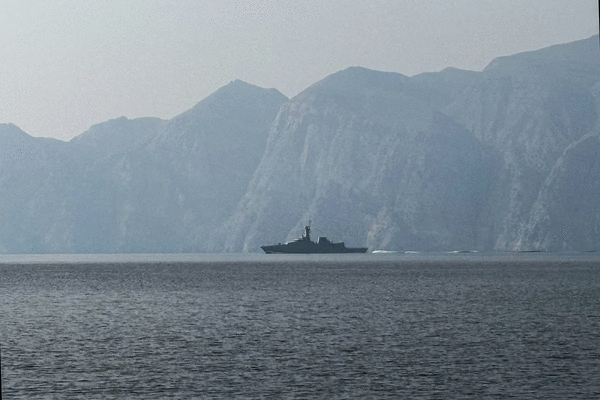
U.S. Navy escorts that are helping tankers cross the Strait of Hormuz are essential to sustaining crude flows through the waterway, Energy Secretary Chris Wright said Sunday, suggesting they won’t end anytime soon.
“We’re getting a lot of ships through, but of course it requires the U.S. military to do that,” Wright said on CNN’s State of the Union. “The Iranians are still causing trouble, but the United States Navy is winning that battle.”
In a series of television interviews Sunday, Wright said oil transits through the strait are averaging more than 9 million barrels per day. With additional crude and products moving through pipelines and other paths, the region is back to “two thirds or more of pre-conflict flows,” he said on CNN. Last week, Wright said that some 17 million barrels of oil transited the strait on Monday.
Recent skirmishes underscore persistent risks from fighting inside the vital waterway. American forces struck three Iranian crude oil carriers, U.S. Central Command said Saturday, after the Islamic Revolutionary Guard Corps launched ballistic missiles at two U.S. Navy warships.
The U.S. Navy has helped ensure safe passage for commercial ships moving through the Strait of Hormuz, which typically carried about a fifth of the world’s oil and gas supplies before the war began on Feb. 28 with U.S.-Israeli strikes on Iran.
Asked on CNN if those naval operations represent a “new normal” in the strait, Wright conceded: “Well, it is today.”
“But, I think as you look forward, other nations will come and work with us in this endeavor,” Wright added. “Certainly, trade for the world is important. It shouldn’t be just the United States’ responsibility, but until Iran changes their position or changes their government, we will have to deal with them.”
Sustaining those oil flows is seen as critical for meeting the world’s energy needs and for protecting a global economy already battered by the Iran war.
It’s also a potent political issue in the U.S., as President Donald Trump looks to quell voter concern about rising costs for an array of consumer goods before the November midterm elections.
Fuel prices have surged in the U.S., with the average cost a gallon of unleaded reaching $4.15 Friday — a record for September and well above the $3.80 drivers paid on July 4, the usual peak of summer driving season, according to auto club AAA. Diesel prices rose to a record of $5.88 a gallon.
Wright suggested the cost of unleaded gasoline could yet fall with the end of the summer driving season and after federal blending policy changes aimed at boosting supply. Fuel refiners have pressed the administration to go further by relaxing biofuel-blending requirements they say are driving up pump prices.
While other countries have largely balked at joining operations to support navigation through the Strait of Hormuz, South Korean media recently reported the government is reviewing potential military operations to help sustain flows. The U.K. and France previously proposed a multinational mission to clear mines and support civilian shipping in the strait.
Wright didn’t specify potential countries that would join the operation. For now, the U.S. Navy is key, he said.
“Yes, it is the U.S. Navy that’s assuring that this flow comes out,” Wright said on Fox News Sunday. “We wish Iran would stop doing what they’re doing, but we are degrading their capacities to do that, and we are learning and getting better and better at defending from their attacks, so this is a losing game for Iran.”
_____
©2026 Bloomberg L.P. Visit bloomberg.com. Distributed by Tribune Content Agency, LLC.






Comments