Some big chains may see a dip, but good pizza rules in Metro Detroit
Published in Business News

Not even a week into the new year, the Wall Street Journal was touting some ominous news.
"America is falling out of love with pizza," reads a Jan. 4 headline.
It's just not true — at least not in Metro Detroit — says local operators of pizza companies big and small. America may be less interested in huge national chains that favor quantity over quality, but around here, pizza still reigns supreme. That is in spite of, and in some cases due to, the increasing popularity of third-party delivery apps.
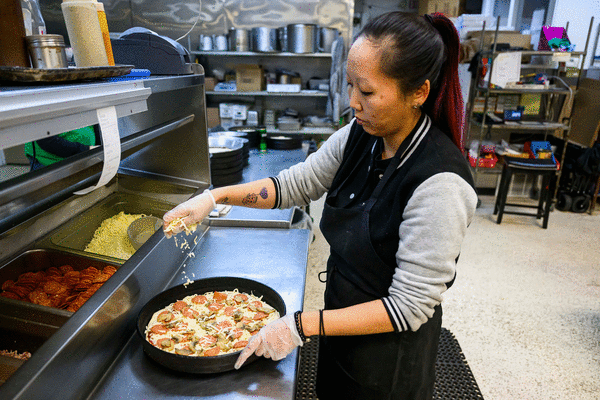
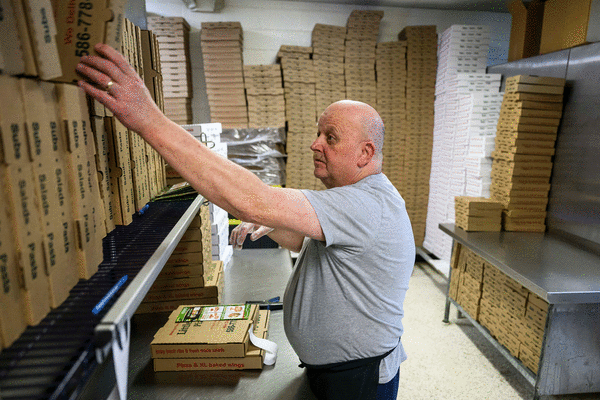
In Metro Detroit, pizza brands are growing because of their dedication to quality dough, freshly grated cheese and superior ovens.
While Buddy's Pizza may have fully pulled back from its West Michigan expansion, many other medium and small pizza companies have been touting growth in southeastern Michigan.
Jet's Pizza, for example, has around 474 stores across the country, with about 165 in Michigan. Owners told The Detroit News they saw an increase in sales last year.
"Pizza is not going to die out. I think it's only stronger," said John Jett, co-founder of Jet's Pizza. "We had a fabulous 2025 year."
"We're in Seattle, Washington, with two stores killing it, and we're in Washington, D.C., where there's nobody that knew us," added Jim Galloway, Jet's co-owner and vice president of franchise sales. "The Detroit-style, it's been copied but not duplicated, in our minds."
Chief Marketing Officer Andy Wetzel says the quality ingredients, clean stores, friendly service and marketing slogan — "this isn't pizza, it's Jet's" — is all part of the success.
"It's working very well for us when you look at our results, compared to what I call 'fast-food pizza,' which was referred to in the (Wall Street Journal) article. We're not seeing the same results they are," Wetzel said. "We're incredibly proud of last year and where we're headed in the category. That positioning has allowed us to differentiate ourselves from fast-food pizza. We don't use flash-frozen cheese. We make our dough every day in our store, along with our ranch and our sauce and we freshly grate our cheese."
He said those factors have allowed Jet's to really compete and not get into a price war that the bigger pizza brands are in.
"Value for them is price," he said. "Value for us, to our customers, is more about the quality, the experience ... everything outside of just selling a cheese cardboard pizza. The category isn't going anywhere. Consumers still love pizza; they always will. They're just looking at value differently."
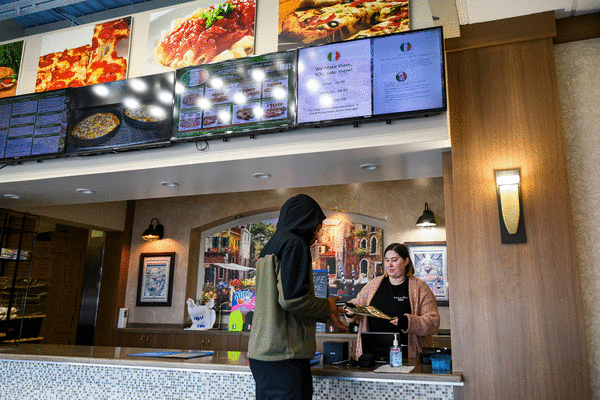
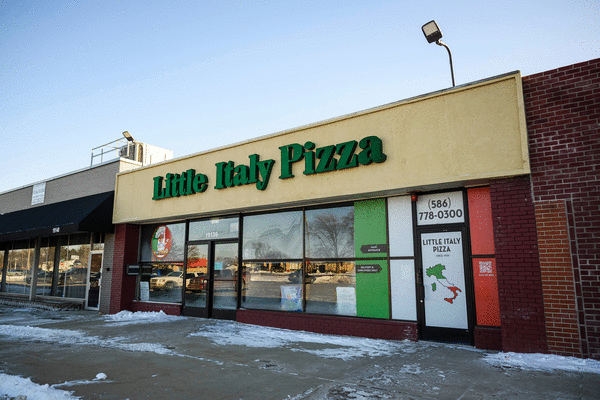
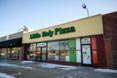
Sean Katchuba from Little Italy Pizza, which has three locations in Macomb County, doesn't have the powerhouse name recognition that Jet's has, so he has to be affordable in addition to being top quality. He recalls that line in "Home Alone," which he re-watched over the recent holiday season, when the family orders 10 pizzas delivered to the house.
"Ten pizzas was $120, that's $12 a pizza in 1990," he said. "Since then, inflation for food has gone up 140%, which means my pizza today should be $20 for a cheese pizza. My cheese pizza is $9.99 Monday and Tuesday."
"My pizza is not that much more expensive (than the top pizza companies') and I'm using real ingredients," he said, adding that the key to his success is quality control and being a hands-on owner. "People are falling out of love with that fly-by-night pizza. The operator and owner of those pizza joints aren't in every pizzeria they own every day looking for the quality like I am."
Katchuba — who just purchased Little Italy Pizza 18 months ago but has 20 years in the pizza industry — sees the third-party delivery apps as a necessary evil. While they do raise the cost of a customer getting his pizza, they're great for getting Little Italy's name out there.
"I'm on them because they're basically advertising for me," he said. "You want pizza in this area within a certain mile radius, I come up, and I don't have to do anything."
As for the big national players like Michigan's Domino's Pizza and Little Caesars Pizza, they're strong despite the rising cost of food. Domino's, the country's largest pizza company in terms of sales, saw retail sales growth of 7% in 2025 at its domestic stores, according to the company. PMQ Pizza reports that the Ann Arbor-based company had $9.5 billion in sales in 2024, up from $9.02 billion in 2023.
Little Caesars remains one of the fastest-growing pizza chains and is often cited as the third-largest American pizza company. Its sales were $4.93 billion in 2024, up from $4.42 billion in 2023, according to industry reports.
Last week, Madison Heights-based Hungry Howie's announced details of its accelerated growth in the area, pointing to the opening of four new locations. Along with new stores in Mount Clemens, West Bloomfield Township, Redford Township and St. Clair Shores, a new Hungry Howie's is also planned for the Wayne State University area of Detroit.
Papa John's and Pizza Hut did see a dip. Papa John's — which has headquarters in Kentucky and Georgia — went from $3.86 billion in 2023 to $3.7 billion in 2024. Pizza Hut, headquartered in Texas, went from $5.37 billion in sales to $5.29 billion in the same time frame.
Saroki's Crispy Chicken & Pizza may have "chicken" in its name before pizza, but this month the Southfield brand was named one of Pizza Marketplace's "Top 25 Pizza Brands to Watch in 2026." With 22 locations, the company surpassed $20 million in revenue last year and is aiming to open 100 locations within the next five years.
"They use quality ingredients, they make their dough. They're co-branded with liquor stores and gas stations, and that is different in and of itself," said Mandy Detwiler, editor of Pizza Marketplace.
Detwiler says the Wall Street Journal article only focused on national pizza chains, which doesn't represent the whole market.
"They weren't looking at local and regional pizzerias," she said. "Most of them don't even try to compete with the big chains. They stick with quality ingredients and great techniques."
Curtis Saroki, president of Saroki’s Crispy Chicken & Pizza knows for a fact that better quality pizza translates to higher sales. The fast-growing brand is meeting customers where they are, by selling its food inside other businesses. Saroki's also sells pizza by the slice, offering customers a single-meal purchase rather than an entire pie.
"Our commitment to quality is working for us," he said. "At one point when we first started, we tried simplifying operations, and we did sacrifice some quality. We noticed a drop off in pizza sales and we weren't happy."
Saroki's switched their conveyor ovens to name-brand brick ovens, and upped their research to be able to make the best pizza possible, using Stanislaw tomatoes, top-quality mozzarella and fermenting dough for 24 hours. Saroki said he didn't want to claim to make New York-style pizza without doing the work.
"We did a ton of research," said Saroki. "My brother even went and trained with one of the best pizza chefs in the world, Tony Gemignani. He earned certification through his school to become a pizza chef. We went to New York and did a lot of tastings and studies."
He said that since implementing the improvements across all locations by the second quarter of 2025, whole pizza pie sales have gone up 4%.
Detwiler said that part of the reason the country's top pizza chains may be seeing a dip in sales is their high cost of what is considered "corporate" pizza. She also cites new weight-loss drugs.
"Their delivery fees have gotten high, and that, on top of a tip for the driver, makes it not economical," she said. When ordering directly from the company, Domino's and Papa John's charge $4.99 for delivery, Pizza Hut is $5.99 and Hungry Howie's can be upwards of $6.99.
As for those on a GLP-1 or other weight loss medication, the very nature of pizza can be a turn-off.
"A doughy, cheese-heavy pizza is a commitment that many people are less willing to make on a random Tuesday night," she said. "We're seeing an explosion of cauliflower crust and Blaze Pizza has actually put out two protein-heavy pizzas. Mini meals and protein-forward toppings (are gaining traction)."
"People still want the flavor of pizza, just not the pizza coma that follows," she said.
Galloway from Sterling Heights-based Jet's isn't convinced it's a problem.
"When people eat pizza, they went off their diet," he said. "Pizza is comfort food."
©2026 www.detroitnews.com. Visit at detroitnews.com. Distributed by Tribune Content Agency, LLC.










Comments